How to Dispute a Debt in Writing Within the 30-Day Window
This page is education, not legal advice. It is not a substitute for advice from a lawyer about your facts. The Fair Debt Collection Practices Act is a federal statute. The Consumer Financial Protection Bureau's Regulation F implements parts of that statute. State collection laws can add rules of their own. Read the official text that applies to your matter.
The validation notice gives a consumer a short window in which a written dispute, or a written request for the original creditor's name and address, changes what the debt collector must do next. The collector must stop collecting the debt, or the disputed portion of it, until the collector mails the required response. The window does not decide whether you owe the debt. It is a procedural right in the federal collection statute.
This page is about that written dispute and that written request. A companion page on this site explains what the validation notice itself must include.
What the Window Is
Under 15 U.S.C. s. 1692g(a), the notice must tell the consumer about rights that run for thirty days after receipt of the notice. The dispute and original-creditor statements in Section 1692g(a)(4) and (5), and the collector's duties in Section 1692g(b), are tied to written notice from the consumer within that thirty-day period.
Regulation F names the same span the "validation period." Section 1006.34(b)(5) says that period starts on the date the debt collector provides the validation information and ends 30 days after the consumer receives or is assumed to receive it. For purposes of determining the end of the period, the collector may assume the consumer receives the information on any date that is at least five days, excluding legal public holidays identified in 5 U.S.C. s. 6103(a), Saturdays, and Sundays, after the collector provides it. The validation notice itself must state the date the collector will consider the end date of that period.
Receipt matters. The statute's thirty days run from receipt of the notice, not from the date printed at the top of the letter. The regulation's assumed-receipt rule is a rule for the collector's calculation of the end date, not a substitute for looking at when you actually received the notice if you have that fact.
What a Written Dispute Does
Section 1692g(b) states the basic rule. If the consumer notifies the debt collector in writing within the thirty-day period that the debt, or any portion thereof, is disputed, or that the consumer requests the name and address of the original creditor, the debt collector shall cease collection of the debt, or any disputed portion thereof, until the debt collector obtains verification of the debt or a copy of a judgment, or the name and address of the original creditor, and a copy of such verification or judgment, or name and address of the original creditor, is mailed to the consumer by the debt collector.
The writing requirement is part of the rule. The cease-collection and mailing duties in Section 1692g(b) are triggered when the consumer notifies the collector in writing within the period. This page does not describe other consequences that a later statute or rule might attach to an oral dispute. If you are relying on this section, put the dispute or the original-creditor request in writing and keep a copy.
Regulation F restates the same duties in 12 C.F.R. s. 1006.38. Upon receipt of a dispute submitted by the consumer in writing within the validation period, a debt collector must cease collection of the debt, or any disputed portion of the debt, until the debt collector sends a copy either of verification of the debt or of a judgment to the consumer in writing or electronically in the manner required by Section 1006.42.
There is a limited exception for a "duplicative dispute." Section 1006.38(a)(1) defines that term as a dispute submitted by the consumer in writing within the validation period that is substantially the same as a dispute previously submitted by the consumer in writing within the validation period for which the collector already has sent verification or a copy of a judgment, and that does not include new and material information to support the dispute. In that case, Section 1006.38(d)(2)(ii) lets the collector either send verification or a judgment copy as usual, or notify the consumer that the dispute is duplicative, provide a brief statement of the reasons for that determination, and refer the consumer to the collector's response to the earlier dispute.
What a Written Request for the Original Creditor Does
The same thirty-day written-notice structure applies if you ask for the original creditor's name and address rather than, or in addition to, disputing the debt.
Under Section 1006.38(c), upon receipt of a request for the name and address of the original creditor submitted by the consumer in writing within the validation period, a debt collector must cease collection of the debt until the collector sends that name and address to the consumer in writing or electronically in the manner required by Section 1006.42, or, if the collector reasonably determines that the original creditor is the same as the current creditor, notifies the consumer of that fact in the required manner and refers the consumer to the validation information already provided.
What "Verification" Means in This Section, and What It Does Not
Section 1692g(b) requires the collector to obtain "verification of the debt or a copy of a judgment" and to mail a copy of that verification or judgment to the consumer. Regulation F requires the collector to send "a copy either of verification of the debt or of a judgment." Neither provision, in the text quoted here, lists a fixed set of attachments, account-level documents, or original contracts that will always count as verification.
Do not read this page as a promise that a collector must send a particular document, or as a claim that mailing a second copy of the same bill always is or always is not verification. What a particular mailing does, or fails to do, under this section is a case-specific question. A later page on this site takes up what "validation" is not. The rule on this page is the one the statute actually writes: collection of the disputed debt must stop until the required mailing goes out.
Collection During the Window, Before You Write
The thirty-day period is not, by itself, a quiet period. Section 1692g(b) says collection activities and communications that do not otherwise violate the Act may continue during the thirty-day period unless the consumer has notified the debt collector in writing that the debt, or any portion of the debt, is disputed, or that the consumer requests the name and address of the original creditor. Any collection activities and communication during the thirty-day period may not overshadow or be inconsistent with the disclosure of the consumer's right to dispute the debt or request the name and address of the original creditor.
Section 1006.38(b)(1) states the overshadowing prohibition in regulation form: during the validation period, a debt collector must not engage in any collection activities or communications that overshadow or are inconsistent with the disclosure of the consumer's rights to dispute the debt and to request the name and address of the original creditor. Section 1006.38(b)(2) gives a safe harbor to a collector who uses Model Form B-1 in the manner described in Section 1006.34(d)(2).
In short, a collector may keep collecting during the window if you have not yet written, but may not drown out the dispute rights. Once a timely written dispute or original-creditor request arrives, collection of the debt, or the disputed portion, must stop until the required response is sent.
Failure to Dispute Is Not an Admission
Section 1692g(c) says the failure of a consumer to dispute the validity of a debt under this section may not be construed by any court as an admission of liability by the consumer. Section 1006.38(d)(1) says the same thing: the failure of a consumer to dispute the validity of a debt does not constitute a legal admission of liability by the consumer.
If you miss the window, you do not, by that fact alone, admit that you owe the debt. You do lose the particular cease-collection and verification process that this section attaches to a timely written dispute. Other rights, including rights under other sections or under state law, may still exist. This page does not catalog those other rights.
How to Use This When You Have a Notice in Hand
Confirm that the sender is writing as a debt collector about a consumer debt, and that you have a validation notice or other writing that starts the window. A formal pleading in a civil action is not an initial communication for purposes of the validation-notice requirement in Section 1692g(a). A lawsuit, if one has been filed, has its own deadlines under court rules. Those deadlines are not replaced by the thirty-day validation window.
Note the date you received the notice and the end date the notice itself states. If you are going to use this section, write within that period. Send the letter to the mailing address the notice gives for disputes and original-creditor requests. Identify the account or the debt clearly. State that you dispute the debt, or a stated portion of it, or that you request the name and address of the original creditor, or both. Keep a copy of what you send and a record of how you sent it.
Then watch for two things: whether collection of the disputed debt stops, and whether a mailing arrives that the collector presents as verification, a copy of a judgment, or the original creditor's name and address. Compare that mailing with the words of Section 1692g(b) and Section 1006.38. This page does not tell you to ignore a summons, and it does not tell you that a written dispute, by itself, dismisses a case.
What This Page Does Not Decide
A timely written dispute does not, by itself, prove that you do not owe the debt, cancel the debt, or end a lawsuit. It also does not, by itself, prove that the collector lacks a claim. It requires the collector to cease collection of the disputed debt until the statutory mailing is made.
This page does not tell you how a particular court would treat a particular dispute letter or a particular verification mailing. Those are case-specific questions. The official text, the dates of receipt and mailing, and the words on the papers are what you compare. Get legal help when you need it for a specific case.
Sources
- 15 U.S.C. s. 1692g. Validation of debts. Legal Information Institute, Cornell Law School. https://www.law.cornell.edu/uscode/text/15/1692g
- 12 C.F.R. s. 1006.34(b)(5). Validation period. Electronic Code of Federal Regulations. https://www.ecfr.gov/current/title-12/part-1006/section-1006.34
- 12 C.F.R. s. 1006.38. Disputes and requests for original-creditor information. Electronic Code of Federal Regulations. https://www.ecfr.gov/current/title-12/part-1006/section-1006.38
Further Reading
The books below are from this publisher's catalog. Links go to the publisher's own titles on Amazon. This site has not joined the Amazon Associates program and does not earn a referral commission from these links.
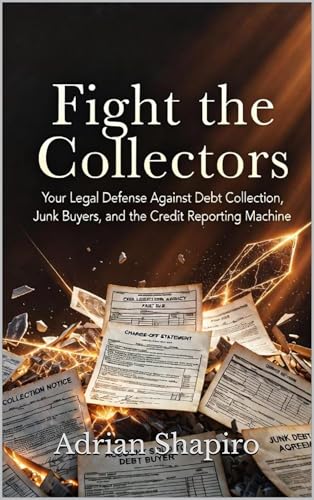 Fight the Collectors: Your Legal Defense Against Debt Collection, Junk Buyers, and the Credit Reporting Machinehttps://www.amazon.com/dp/B0GXMTVZVT
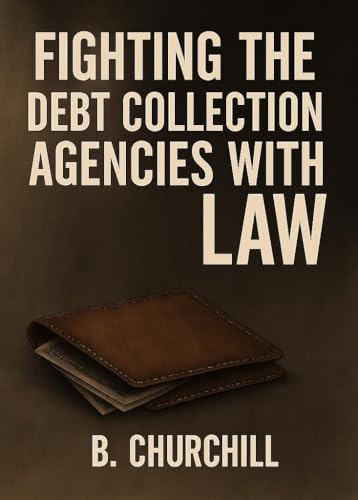 Fighting the Debt Collection Agencies with Lawhttps://www.amazon.com/dp/B0FX7DM2P1