What Validation Is Not
This page is education, not legal advice. It is not a substitute for advice from a lawyer about your facts. The Fair Debt Collection Practices Act is a federal statute. The Consumer Financial Protection Bureau's Regulation F implements parts of that statute. State collection laws can add rules of their own. Read the official text that applies to your matter.
"Validation" may be the most repeated word in debt-collection advice, and one of the most stretched. Letters circulate online that demand a signed contract, a full payment history, proof of a license, and an affidavit from the original creditor, all under the heading "debt validation." Some readers come away believing that a collector who mails back a copy of the bill has broken the law, or that a validation letter ends a debt. The federal text is narrower than that. Knowing what the rule does not do is as useful as knowing what it does.
Two companion pages on this site cover what the validation notice must include and what a written dispute within the 30-day window triggers. This page covers the limits.
Validation Is Not a Word the Statute Defines
The section is 15 U.S.C. s. 1692g, and its heading is "Validation of debts." The word inside the operative rule is a different one. Section 1692g(b) says that when a consumer disputes the debt in writing within the thirty-day period, the debt collector shall cease collection of the debt, or any disputed portion of it, until the collector obtains "verification of the debt or a copy of a judgment" and mails a copy to the consumer.
Neither the statute nor Regulation F lists the contents of a verification. Section 1006.38(d)(2)(i) of Regulation F requires the collector to send "a copy either of verification of the debt or of a judgment" in writing or electronically. Neither text names a contract, a ledger, an assignment, or an affidavit as a required item. A letter that tells a collector to produce a list of documents "or the debt is void" is asking for more than these provisions say. That does not make the request pointless. It means the request is not, by itself, a legal duty the collector must meet item by item.
Validation Is Not a Right You Can Trigger at Any Time
The cease-collection duty in Section 1692g(b) attaches to a dispute made in writing within the thirty-day period described in Section 1692g(a). Regulation F calls that span the validation period, and Section 1006.38(d)(2) ties the collector's response duty to a dispute "submitted by the consumer in writing within the validation period."
A dispute sent months later is still a dispute. It is not the dispute this section describes, and it does not trigger this section's stop-and-verify sequence. Other rules may still apply to a late dispute. This page does not catalog them.
"In Writing" Is Broader Than a Mailed Letter
Many guides say the dispute must go by certified mail. The official interpretation of Regulation F says otherwise about what counts as writing. Comment 38-1 in Supplement I to Part 1006 states that a consumer has disputed the debt in writing if the consumer, for example, mails the written dispute, returns the consumer-response form that Section 1006.34(c)(4) requires on the validation notice with the dispute marked, uses an email address or website portal through which the collector accepts electronic communications from consumers, or delivers the dispute in person or by courier.
Certified mail gives you proof of the date. That is a practical reason to use it. It is not a legal requirement for the dispute to count as written. Whatever method you use, keep a copy and keep proof of the date it went out.
Validation Does Not Apply to Every Creditor
Section 1692g places its duties on a "debt collector." Section 1692a(6) defines that term as a person who uses interstate commerce or the mails in a business whose principal purpose is the collection of any debts, or who regularly collects or attempts to collect debts owed or due or asserted to be owed or due another.
The definition has listed exclusions. Clause (A) excludes any officer or employee of a creditor while, in the name of the creditor, collecting debts for that creditor. Clause (F) excludes a person collecting a debt to the extent the activity concerns a debt that person originated, or a debt that was not in default when that person obtained it, among other listed cases.
There is one express reversal. The same paragraph says the term includes any creditor who, in the process of collecting its own debts, uses any name other than its own which would indicate that a third person is collecting.
The practical point: a bank collecting its own credit card account in its own name is generally outside the debt-collector definition, so the Section 1692g validation process does not run against it the way it runs against a third-party collector. State law and other federal statutes may still govern the bank's conduct. Whether a particular buyer of a defaulted account falls inside the definition is a fact question this page does not settle.
The Same Bill, Sent Twice
This is the question most readers bring. A collector receives a timely written dispute and mails back a copy of the same statement it sent before. Has the debt been validated?
The federal text does not answer that with a rule about statements. What the text does say is this. Collection of the disputed debt must stop until the collector sends verification or a copy of a judgment. The statute sets no deadline for that mailing. A collector that cannot or does not send verification is not ordered to send something by a date certain. It is ordered not to collect the disputed debt until it does.
So the useful check is not "did they send the right papers" in the abstract. It is a two-part question you can answer from your own records. Did collection of the disputed debt stop after your timely written dispute arrived? And did the collector resume collecting before it sent something it presented as verification or a judgment? Calls and new demand letters on the disputed debt after a timely written dispute, with no verification mailed, are facts worth writing down with dates.
Whether a particular mailing qualifies as verification is a case-specific question. Courts read the facts in front of them. This page does not predict how a given court would treat a given letter.
A Second Dispute Is Not Always Ignored
Regulation F lets a collector treat some repeat disputes as duplicative. Section 1006.38(a)(1) defines a duplicative dispute as one submitted in writing within the validation period that is substantially the same as an earlier written dispute the collector already answered with verification or a judgment, and that does not include new and material information to support the dispute. For a dispute the collector reasonably determines is duplicative, Section 1006.38(d)(2)(ii) lets it send a notice saying so, with a brief statement of reasons and a reference to its earlier response, instead of verifying again.
The exception has limits. The official interpretation, comment 38(a)(1)-2, says information is new if the consumer did not provide it with the earlier dispute, and material if it is reasonably likely to change the verification the collector provided or would have provided. Its example is a consumer who first disputes without support and then sends a cancelled check showing the debt was paid. The cancelled check is new and material information. Rewording the same complaint does not make it new. Comment 38(a)(1)-1 says a later dispute can be substantially the same as an earlier one even if it does not repeat the earlier language word for word.
If you dispute a second time, send what you did not send before: proof of payment, a settlement letter, a bankruptcy discharge, an identity-theft report, or account records showing a different balance.
Validation Is Not Proof That You Owe, and Silence Is Not a Confession
A verification mailing satisfies a procedural duty. Nothing in Section 1692g says that sending verification establishes that the consumer owes the debt or the amount claimed. The reverse also holds. Section 1692g(c) states that the failure of a consumer to dispute the validity of a debt may not be construed by any court as an admission of liability. Section 1006.38(d)(1) says the same.
Both sides of the exchange stay where they were on the merits. The collector still has to prove its claim if it sues. You still have every defense you had before.
Validation Is Not an Answer to a Lawsuit
Section 1692g(d) states that a communication in the form of a formal pleading in a civil action shall not be treated as an initial communication for purposes of subsection (a). A summons and complaint do not start a validation period. A validation letter sent after you are served does not extend the time to answer, does not take the place of an answer, and does not pause the court's deadlines.
If you have been served, the court rules set your deadline. A dispute letter to the collector's law firm is not a filing with the court. Treat the two as separate tracks: one is a federal collection-practice right, the other is a court case with its own rules.
Validation Does Not Erase the Debt
A debt that is never verified is not canceled by that fact. Section 1692g(b) bars collection of the disputed debt until verification is sent. It does not discharge the obligation, and it does not say the debt becomes unenforceable. A collector can send verification later and resume. A creditor outside the debt-collector definition is not bound by this section at all.
That is the real value of the rule: a short window in which a written dispute forces a third-party collector to stop and back up its claim before it keeps pressing. It is a useful tool. It is not a way out of a debt.
What This Page Does Not Decide
This page does not tell you whether a particular company is a debt collector, whether a particular mailing counts as verification, or how a particular court would rule on a claim under the Act. Those questions turn on facts. Compare the official text with the dates and the papers in your file, and get legal help when you need it for a specific case.
Sources
- 15 U.S.C. s. 1692a. Definitions. Legal Information Institute, Cornell Law School. https://www.law.cornell.edu/uscode/text/15/1692a
- 15 U.S.C. s. 1692g. Validation of debts. Legal Information Institute, Cornell Law School. https://www.law.cornell.edu/uscode/text/15/1692g
- 12 C.F.R. s. 1006.38. Disputes and requests for original-creditor information. Electronic Code of Federal Regulations. https://www.ecfr.gov/current/title-12/part-1006/section-1006.38
- 12 C.F.R. Part 1006, Supplement I. Official Interpretations, comments 38-1, 38(a)(1)-1, and 38(a)(1)-2. Electronic Code of Federal Regulations. https://www.ecfr.gov/current/title-12/chapter-X/part-1006/appendix-Supplement%20I%20to%20Part%201006
Further Reading
The books below are from this publisher's catalog. Links go to the publisher's own titles on Amazon. This site has not joined the Amazon Associates program and does not earn a referral commission from these links.
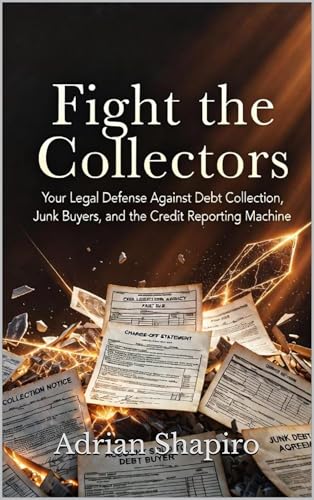 Fight the Collectors: Your Legal Defense Against Debt Collection, Junk Buyers, and the Credit Reporting Machinehttps://www.amazon.com/dp/B0GXMTVZVT
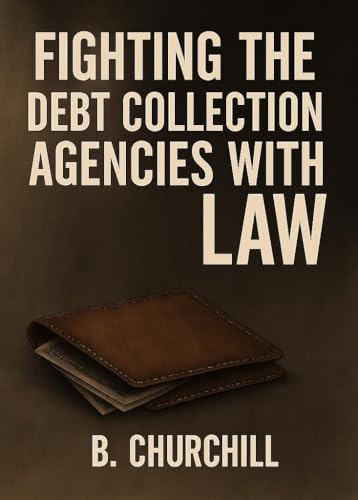 Fighting the Debt Collection Agencies with Lawhttps://www.amazon.com/dp/B0FX7DM2P1