Vacating a Default Judgment: Rule 60(b), Improper Service, and Deadlines
This page is education, not legal advice. It is not a substitute for advice from a lawyer about your facts. Federal Rules of Civil Procedure 4(e), 55(c), and 60(b) and 60(c)(1) are the federal-court rules this page quotes. They apply in federal district court. Most collection lawsuits are filed in state court. Those courts have their own rules for service, default, and relief from a judgment, and their own deadlines. Some of those rules resemble the federal text. Others do not. This page does not publish a 50-state chart, and it does not tell you whether a particular judgment can be set aside. Read the official rules that apply in the court that entered the judgment, and get legal help when you need it for a specific case.
A default can follow when a defendant does not appear or does not answer. An entry of default and a final default judgment are not the same step. Setting aside an entry of default is not the same as setting aside a final judgment. Companion pages on this site cover what can follow if you do not answer a collection lawsuit, and how personal jurisdiction and service fit together. This page stays on the federal rules for service, default, and relief from a final judgment.
Entry of Default and a Final Default Judgment
Rule 55 sets out the federal steps in order. Under Rule 55(a), when a party against whom a judgment for affirmative relief is sought has failed to plead or otherwise defend, and that failure is shown by affidavit or otherwise, the clerk must enter the party's default. That entry of default is not yet a final judgment.
Rule 55(b) then addresses entry of a default judgment. If the plaintiff's claim is for a sum certain or a sum that can be made certain by computation, the clerk — on the plaintiff's request, with an affidavit showing the amount due — must enter judgment for that amount and costs against a defendant who has been defaulted for not appearing and who is neither a minor nor an incompetent person. In all other cases, the party must apply to the court for a default judgment. If the party against whom a default judgment is sought has appeared personally or by a representative, that party or its representative must be served with written notice of the application at least seven days before the hearing. The court may conduct hearings or make referrals, preserving any federal statutory right to a jury trial, when it needs to conduct an accounting, determine the amount of damages, establish the truth of any allegation by evidence, or investigate any other matter.
Rule 55(c) then draws the distinction that matters once a default is on the docket. The court may set aside an entry of default for good cause, and it may set aside a final default judgment under Rule 60(b). "Good cause" is the federal standard for an entry of default that has not yet become a final judgment. Once a final default judgment has been entered, the federal path is Rule 60(b), not the "good cause" standard standing alone.
That distinction matters for timing and for the showing the rule requires. An earlier request to set aside an entry of default is not automatically converted into a Rule 60(b) motion, and a Rule 60(b) motion is not decided under the "good cause" standard alone. State courts may use different labels for the two steps, or may collapse them. The federal rule keeps them separate.
Serving an Individual in Federal Court
Rule 4(e) states how an individual may be served in a judicial district of the United States, unless federal law provides otherwise, other than a minor, an incompetent person, or a person whose waiver has been filed. Service may be made by following state law for serving a summons in an action brought in courts of general jurisdiction in the state where the district court is located or where service is made. Or service may be made by delivering a copy of the summons and of the complaint to the individual personally; leaving a copy of each at the individual's dwelling or usual place of abode with someone of suitable age and discretion who resides there; or delivering a copy of each to an agent authorized by appointment or by law to receive service of process.
Service is how a court ordinarily obtains personal jurisdiction over a defendant who is served in that way. The three federal methods in Rule 4(e)(2) are personal delivery, leaving the papers at the dwelling or usual place of abode with someone of suitable age and discretion who resides there, or delivery to an authorized agent. Substituted service that does not meet those conditions, or that does not meet the state-law method permitted by Rule 4(e)(1), is not service under the federal rule. If service was not made in the manner the applicable rule requires, a later judgment may be open to a claim that the court lacked personal jurisdiction. That claim, in federal court, is often raised under Rule 60(b)(4), discussed below. State courts apply their own service statutes. Rule 4(e) is not the service rule in a state collection case.
The Grounds in Rule 60(b)
Rule 60(b) lists the grounds on which a federal court may relieve a party or its legal representative from a final judgment, order, or proceeding. The court may do so for the following reasons:
(1) mistake, inadvertence, surprise, or excusable neglect;
(2) newly discovered evidence that, with reasonable diligence, could not have been discovered in time to move for a new trial under Rule 59(b);
(3) fraud (whether previously called intrinsic or extrinsic), misrepresentation, or misconduct by an opposing party;
(4) the judgment is void;
(5) the judgment has been satisfied, released, or discharged; it is based on an earlier judgment that has been reversed or vacated; or applying it prospectively is no longer equitable; or
(6) any other reason that justifies relief.
Each numbered ground is a separate reason. Excusable neglect under Rule 60(b)(1) is a discretionary ground. It is often the ground a party cites when the party did not answer in time, or did not know about the case, and asks the court to reopen the judgment so the merits can be heard. The court decides whether the neglect was excusable under that rule.
Rule 60(b)(4) is different in kind. The ground is that the judgment is void, not that the court should excuse a missed deadline as a matter of discretion. A judgment entered without personal jurisdiction, including a judgment entered after defective service, is the usual illustration of a void judgment in this setting. A void-judgment motion is not the same request as an excusable-neglect motion. The first asks whether the judgment was entered with authority over the person. The second asks the court to excuse a failure and reopen a judgment that was otherwise entered with authority.
Rule 60(b)(6) is the residual ground: any other reason that justifies relief. This page does not unpack the federal case law on when that residual ground may be used alongside, or instead of, the more specific grounds. Rule 60(b)(2), (b)(3), and (b)(5) have their own elements, which the text itself states.
The Federal Deadline Rule
Rule 60(c)(1) supplies the time limit. A motion under Rule 60(b) must be made within a reasonable time — and for reasons (1), (2), and (3) no more than a year after the entry of the judgment or order or the date of the proceeding.
Two clocks sit in that sentence. Every Rule 60(b) motion must be made within a reasonable time. Motions under Rule 60(b)(1), (2), and (3) have an additional outer limit: no more than one year. That one-year cap does not apply to a motion under Rule 60(b)(4), (5), or (6). Those motions are still subject to the reasonable-time requirement. The rule itself does not define "reasonable time," and this page does not invent a uniform federal period for a void-judgment motion.
That is why a void-judgment claim, such as a claim that defective service left the court without personal jurisdiction, is treated differently from a discretionary excusable-neglect motion. The grounds are different. The one-year cap in Rule 60(c)(1) applies to the excusable-neglect, newly-discovered-evidence, and fraud grounds, and not to the void-judgment ground. None of that text tells you what a particular state court will do. State statutes often set much shorter, or differently measured, deadlines for moving to vacate a default judgment. Missing a state deadline can bar relief even when a federal analogy would look more generous. The official rule and deadline of the court that entered the judgment are the ones that count.
What This Page Does Not Decide
This page does not decide whether a particular default judgment is void, whether a particular episode of neglect was excusable, or whether a motion is timely. It does not unpack service on a corporation, service abroad, or waiver of service. It does not unpack independent actions or fraud on the court under Rule 60(d). It does not treat the federal one-year cap, or the federal "reasonable time" requirement, as the deadline in any state court. Read the service rule, the default rule, and the deadline that apply to the judgment you are looking at, and get legal help when you need it for a specific case.
Sources
- Federal Rules of Civil Procedure, Rule 4(e). Summons. Serving an Individual Within a Judicial District of the United States. Legal Information Institute, Cornell Law School.
https://www.law.cornell.edu/rules/frcp/rule_4 - Federal Rules of Civil Procedure, Rule 55(c). Default; Default Judgment. Setting Aside a Default or a Default Judgment. Legal Information Institute, Cornell Law School.
https://www.law.cornell.edu/rules/frcp/rule_55 - Federal Rules of Civil Procedure, Rule 60(b) and 60(c)(1). Relief from a Judgment or Order. Grounds for Relief from a Final Judgment, Order, or Proceeding; Timing and Effect of the Motion. Legal Information Institute, Cornell Law School.
https://www.law.cornell.edu/rules/frcp/rule_60
Further Reading
The books below are from this publisher's catalog. Links go to the publisher's own titles on Amazon. This site has not joined the Amazon Associates program and does not earn a referral commission from these links.
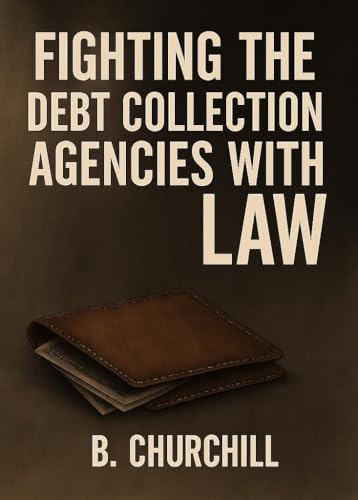 Fighting the Debt Collection Agencies with Lawhttps://www.amazon.com/dp/B0FX7DM2P1
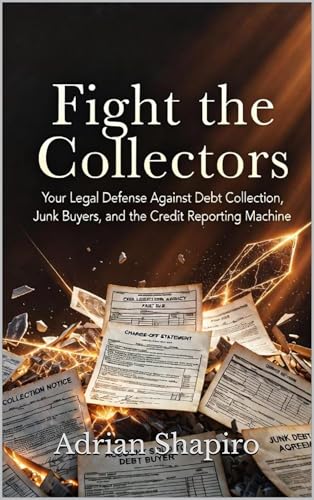 Fight the Collectors: Your Legal Defense Against Debt Collection, Junk Buyers, and the Credit Reporting Machinehttps://www.amazon.com/dp/B0GXMTVZVT