What a UCC-1 Financing Statement Is
This page is education, not legal advice. It is not a substitute for advice from a lawyer about your facts. Article 9 of the Uniform Commercial Code is state law. States enact the uniform text, sometimes with changes. Filing offices, forms, and fees are set by the state in which you file or search. Read the official text and the filing rules in force in the relevant state.
A UCC-1 is the common name for the initial financing statement filed under Article 9. People treat that form as if it created a lien by itself, or as if it proved a debt, or as if filing one were a way to cancel an obligation. The statute does not work that way. A financing statement is a public notice. Used in the setting Article 9 provides, it helps perfect a security interest so that the secured party's interest is effective against other creditors. It is not the agreement that creates the security interest, and it is not a court judgment.
The Statutory Definition
Section 9-102(a)(39) defines a "financing statement" as a record or records composed of an initial financing statement and any filed record relating to the initial financing statement. The UCC-1 is the initial filing. Later amendments, continuation statements, and termination statements are filed records that relate to it. Together they make up the financing statement.
A few nearby definitions keep the parts straight. "Collateral" is the property subject to a security interest or agricultural lien. A "security agreement" is an agreement that creates or provides for a security interest. A "secured party" includes a person in whose favor a security interest is created or provided for under a security agreement, whether or not any obligation to be secured is outstanding. A "debtor," in the ordinary case, is a person having an interest, other than a security interest or other lien, in the collateral, whether or not that person is the obligor.
Notice those last two points. The debtor on a financing statement is the person with an interest in the collateral, not automatically every person who owes the debt. And a security agreement, not a UCC-1, is what creates or provides for the security interest.
What Has to Be on the Initial Filing
Section 9-502(a) is short. Subject to the real-property rules in subsection (b), a financing statement is sufficient only if it provides the name of the debtor, provides the name of the secured party or a representative of the secured party, and indicates the collateral covered by the financing statement.
Section 9-504 says the indication of collateral is sufficient if the financing statement provides a description of the collateral pursuant to Section 9-108, or an indication that the financing statement covers all assets or all personal property.
For as-extracted collateral, timber to be cut, or a fixture filing, Section 9-502(b) adds more. The record must indicate that it covers that type of collateral, indicate that it is to be filed in the real property records, provide a description of the related real property, and, if the debtor does not have an interest of record in the real property, provide the name of a record owner.
A financing statement may be filed before a security agreement is made or a security interest otherwise attaches. That is Section 9-502(d). Early filing does not skip the rest of Article 9. It only allows the notice to be on file when attachment later occurs.
Attachment Is a Different Event
Filing does not, by itself, make a security interest enforceable. Section 9-203(a) says a security interest attaches to collateral when it becomes enforceable against the debtor with respect to the collateral, unless an agreement expressly postpones the time of attachment.
Section 9-203(b) states the ordinary requirements. A security interest is enforceable against the debtor and third parties with respect to the collateral only if value has been given; the debtor has rights in the collateral or the power to transfer rights in the collateral to a secured party; and one of the listed conditions is met. The usual condition is that the debtor has authenticated a security agreement that provides a description of the collateral. Other conditions cover possession or control of certain kinds of collateral under the debtor's security agreement.
If those requirements are not met, there is no attached security interest to perfect. A UCC-1 sitting in the filing office does not fill that gap.
Perfection, and Why Filing Matters
Perfection is the step that generally gives a security interest priority against other claimants. Section 9-308(a) says that, except as otherwise provided in that section and Section 9-309, a security interest is perfected if it has attached and all of the applicable requirements for perfection in Sections 9-310 through 9-316 have been satisfied. If the perfection requirements are already satisfied before attachment, the interest is perfected when it attaches.
Section 9-310(a) states the general rule: except as otherwise provided in subsection (b) and Section 9-312(b), a financing statement must be filed to perfect all security interests and agricultural liens. Subsection (b) then lists the exceptions, including security interests perfected by possession or control, certain security interests that perfect automatically when they attach, and other cases the statute names. Filing is the ordinary method. It is not the only method.
Authorization to File
Not every person may file an initial financing statement. Section 9-509(a) says a person may file an initial financing statement, an amendment that adds collateral, or an amendment that adds a debtor, only if the debtor authorizes the filing in an authenticated record or pursuant to subsection (b) or (c), or if the person holds an agricultural lien that has become effective at the time of filing and the financing statement covers only that collateral.
Section 9-509(b) is the everyday path. By authenticating or becoming bound as debtor by a security agreement, a debtor or new debtor authorizes the filing of an initial financing statement, and an amendment, covering the collateral described in the security agreement and certain proceeds. The security agreement is both the source of the interest and, in this ordinary case, the authorization to file.
Errors in the Debtor's Name
Minor errors do not automatically void a filing. Section 9-506(a) says a financing statement that substantially satisfies the requirements of this part is effective even if it has minor errors or omissions, unless the errors or omissions make the financing statement seriously misleading.
The debtor's name is the search key, so the statute treats a bad name as a serious problem. Section 9-506(b) says that, except as provided in subsection (c), a financing statement that fails sufficiently to provide the name of the debtor in accordance with Section 9-503(a) is seriously misleading. Subsection (c) then supplies the search test: if a search of the filing office's records under the debtor's correct name, using the filing office's standard search logic, if any, would disclose the financing statement, the name provided does not make the financing statement seriously misleading.
How Long a Filing Lasts
Section 9-515(a) states the ordinary life of a filed financing statement: five years after the date of filing, except as otherwise provided in subsections (b), (e), (f), and (g). Public-finance and manufactured-home transactions can have a thirty-year period if the initial filing indicates that it is filed in connection with such a transaction. A filing against a transmitting utility, if it so indicates, stays effective until a termination statement is filed.
If no continuation statement is filed in time, the financing statement lapses. Section 9-515(c) says that upon lapse, the financing statement ceases to be effective and any security interest or agricultural lien that was perfected by the financing statement becomes unperfected, unless the security interest is perfected otherwise. If it becomes unperfected upon lapse, it is deemed never to have been perfected as against a purchaser of the collateral for value.
A continuation statement may be filed only within six months before the period expires. A timely continuation continues effectiveness for five more years, and later continuation statements can be filed in the same way.
Where the Record Is Filed
Section 9-501 tells you which office receives the filing when the local law of a state governs perfection. For as-extracted collateral, timber to be cut, or a fixture filing covering goods that are or are to become fixtures, the filing goes in the office designated for recording a mortgage on the related real property. In all other cases, the filing goes in the office the state's enactment names in Section 9-501(a)(2). That office is a matter of state law. Look up the office your state designates before you search or file.
What a UCC-1 Is Not
A financing statement is public notice of a claimed security interest in personal property, or of a related agricultural lien. It is not proof that the underlying debt is valid, or that the amount stated in a collection letter is due. It is not a court judgment. It does not, by itself, transfer title to the collateral. It does not attach a security interest if the Section 9-203 requirements have not been met. It does not replace a security agreement. And filing a UCC-1 is not a method for canceling a consumer debt or for binding a creditor who never authenticated a security agreement and never authorized a filing.
If you find a financing statement in a search, read it as a notice record. Check the debtor name, the secured party name, the collateral indication, the file date, and whether the five-year period, or any other period the record claims, is still running. Then ask the separate questions Article 9 requires: was the filing authorized, did a security interest attach, and was that interest perfected.
Sources
- UCC s. 9-102. Definitions and Index of Definitions. Legal Information Institute, Cornell Law School. https://www.law.cornell.edu/ucc/9/9-102
- UCC s. 9-203. Attachment and Enforceability of Security Interest. Legal Information Institute, Cornell Law School. https://www.law.cornell.edu/ucc/9/9-203
- UCC s. 9-308. When Security Interest or Agricultural Lien Is Perfected. Legal Information Institute, Cornell Law School. https://www.law.cornell.edu/ucc/9/9-308
- UCC s. 9-310. When Filing Required to Perfect Security Interest or Agricultural Lien. Legal Information Institute, Cornell Law School. https://www.law.cornell.edu/ucc/9/9-310
- UCC s. 9-501. Filing Office. Legal Information Institute, Cornell Law School. https://www.law.cornell.edu/ucc/9/9-501
- UCC s. 9-502. Contents of Financing Statement; Record of Mortgage as Financing Statement; Time of Filing Financing Statement. Legal Information Institute, Cornell Law School. https://www.law.cornell.edu/ucc/9/9-502
- UCC s. 9-504. Indication of Collateral. Legal Information Institute, Cornell Law School. https://www.law.cornell.edu/ucc/9/9-504
- UCC s. 9-506. Effect of Errors or Omissions. Legal Information Institute, Cornell Law School. https://www.law.cornell.edu/ucc/9/9-506
- UCC s. 9-509. Persons Entitled to File a Record. Legal Information Institute, Cornell Law School. https://www.law.cornell.edu/ucc/9/9-509
- UCC s. 9-515. Duration and Effectiveness of Financing Statement; Effect of Lapsed Financing Statement. Legal Information Institute, Cornell Law School. https://www.law.cornell.edu/ucc/9/9-515
Further Reading
The books below are from this publisher's catalog. Links go to the publisher's own titles on Amazon. This site has not joined the Amazon Associates program and does not earn a referral commission from these links.
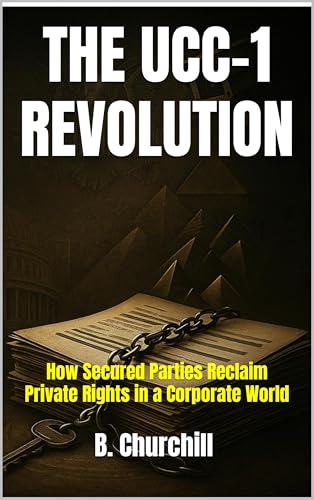 THE UCC-1 REVOLUTION: How Secured Parties Reclaim Private Rights in a Corporate Worldhttps://www.amazon.com/dp/B0G76MXJB2
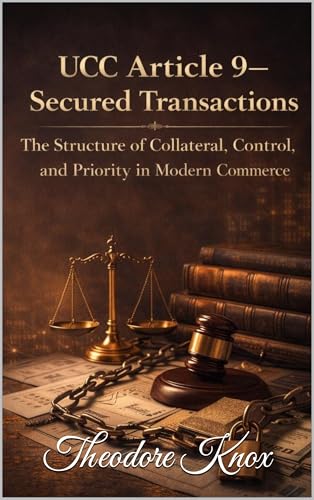 UCC Article 9 — Secured Transactions: The Structure of Collateral, Control, and Priority in Modern Commercehttps://www.amazon.com/dp/B0GTGC7RFR