What Public Law 73-10 Actually Says
This page is education, not legal advice. It is not a substitute for advice from a lawyer about your facts. The joint resolution discussed here is a federal enactment. Its current codification in the United States Code has been amended since 1933. Read the official 1933 text and the official text of the Code provision now in force.
Readers often meet this text under the name Public Law 73-10. The official designation in the Statutes at Large is different. The measure is House Joint Resolution 192, Public Resolution No. 10 of the 73d Congress, Chapter 48, printed at 48 Stat. 112-113. Its official title is "To assure uniform value to the coins and currencies of the United States." It was approved on June 5, 1933, at 4:40 p.m.
This page stays on that official text, the gold-clause problem the preamble describes, the way Section 1 of the resolution is now codified in 31 U.S.C. s. 5118, and what the words actually do and do not say. It does not develop payment-adjustment, offset, or other theories about using the resolution as a method of satisfying a debt without payment.
The Preamble: Why Congress Acted
The resolution opens with two "whereas" clauses. The first states that the holding of or dealing in gold affect the public interest, and are therefore subject to proper regulation and restriction.
The second states that the existing emergency has disclosed that provisions of obligations which purport to give the obligee a right to require payment in gold or a particular kind of coin or currency of the United States, or in an amount in money of the United States measured thereby, obstruct the power of the Congress to regulate the value of the money of the United States, and are inconsistent with the declared policy of the Congress to maintain at all times the equal power of every dollar, coined or issued by the United States, in the markets and in the payment of debts.
That is the problem the operative sections then address: a clause that requires payment in gold, or in a particular kind of coin or currency, or in an amount of money measured by gold or by a particular kind of coin or currency.
Section 1(a): The Operative Rules
Section 1(a) has three working parts, followed by a repeal clause that applies to certain federal authorizing laws.
First, every provision contained in or made with respect to any obligation which purports to give the obligee a right to require payment in gold or a particular kind of coin or currency, or in an amount in money of the United States measured thereby, is declared to be against public policy.
Second, no such provision shall be contained in or made with respect to any obligation hereafter incurred.
Third, every obligation, heretofore or hereafter incurred, whether or not any such provision is contained therein or made with respect thereto, shall be discharged upon payment, dollar for dollar, in any coin or currency which at the time of payment is legal tender for public and private debts.
The same subsection then provides that any such provision contained in any law authorizing obligations to be issued by or under authority of the United States is repealed, but that the repeal of any such provision shall not invalidate any other provision or authority contained in such law.
The official text does not say that an obligation is cancelled without payment. It says the obligation "shall be discharged upon payment, dollar for dollar," in whatever coin or currency is legal tender at the time of payment. Payment, in legal tender, dollar for dollar, is the condition the sentence itself supplies.
Section 1(b): What "Obligation" and "Coin or Currency" Mean
Section 1(b) supplies two definitions for the resolution.
The term "obligation" means an obligation (including every obligation of and to the United States, excepting currency) payable in money of the United States.
The term "coin or currency" means coin or currency of the United States, including Federal Reserve notes and circulating notes of Federal Reserve banks and national banking associations.
The definition of "obligation" is broad. It reaches obligations of the United States and obligations to the United States, so long as they are payable in money of the United States, and it excepts currency itself. It is still a definition for this resolution.
Section 2: The Legal-Tender Amendment
Section 2 does not itself enact a new free-standing legal-tender code. It amends the last sentence of paragraph (1) of subsection (b) of section 43 of the Act approved May 12, 1933, "to relieve the existing national economic emergency by increasing agricultural purchasing power," and for other purposes stated in that Act's title.
As amended, that sentence reads: "All coins and currencies of the United States (including Federal Reserve notes and circulating notes of Federal Reserve banks and national banking associations) heretofore or hereafter coined or issued, shall be legal tender for all debts, public and private, public charges, taxes, duties, and dues, except that gold coins, when below the standard weight and limit of tolerance provided by law for the single piece, shall be legal tender only at valuation in proportion to their actual weight."
The current legal-tender provision in the United States Code is 31 U.S.C. s. 5103. It states that United States coins and currency (including Federal reserve notes and circulating notes of Federal reserve banks and national banks) are legal tender for all debts, public charges, taxes, and dues, and that foreign gold or silver coins are not legal tender for debts. The historical and revision notes to Section 5103 identify later sources for that section, including the Coinage Act of 1965. Section 5103 is the current legal-tender statute, not a word-for-word reenactment of Section 2 of the 1933 resolution.
How the Text Is Codified Today
The historical and revision notes to 31 U.S.C. s. 5118 state that subsection (d) is sourced from Section 1 of the June 5, 1933, joint resolution, formerly 31 U.S.C. 463. Other subsections of Section 5118 come from later statutes, including the Gold Reserve Act of January 30, 1934, and the Act of August 27, 1935. Those later provisions are not the 1933 resolution, and this page does not unpack them.
Section 5118(d)(1) now provides that, in that subsection, "obligation" means any obligation (except United States currency) payable in United States money.
Section 5118(d)(2) now provides that an obligation issued containing a gold clause or governed by a gold clause is discharged on payment (dollar for dollar) in United States coin or currency that is legal tender at the time of payment. The same paragraph then adds: "This paragraph does not apply to an obligation issued after October 27, 1977."
Section 5118(a)(1) defines "gold clause" for the section as a provision in or related to an obligation alleging to give the obligee a right to require payment in gold, a particular United States coin or currency, or United States money measured in gold or a particular United States coin or currency.
The current Code therefore still ties discharge of a gold-clause obligation to payment, dollar for dollar, in legal tender. It also limits that paragraph to obligations issued on or before October 27, 1977. An obligation issued after that date is outside Section 5118(d)(2). Whether a particular instrument contains a gold clause, when it was issued, and what law now governs it are questions this page does not decide.
The Supreme Court's Private-Contract Holding
In Norman v. Baltimore & Ohio Railroad Co., 294 U.S. 240 (1935), the Supreme Court addressed the validity of the June 5, 1933, joint resolution with respect to the gold clauses of private contracts for the payment of money. Chief Justice Hughes delivered the opinion of the Court.
One of the cases before the Court, No. 270, was a suit on a coupon of a Baltimore & Ohio Railroad bond dated February 1, 1930. The bond provided that payment of principal and interest would be made in gold coin of the United States of or equal to the standard of weight and fineness existing on February 1, 1930. The plaintiff presented a $22.50 coupon payable on February 1, 1934, and demanded $38.10, which the complaint treated as the gold equivalent under the earlier standard after the gold content of the dollar had been changed. The defendant refused to pay in gold or in that claimed equivalent.
The Court held that the gold clauses before it were not contracts for payment in gold coin as a commodity, or in bullion, but were contracts for the payment of money. Fairly construed, the Court said, the clauses were intended to afford a definite standard or measure of value, and thus to protect against a depreciation of the currency and against the discharge of the obligation by a payment of lesser value than that prescribed.
The Court then sustained the resolution as an exercise of Congress's constitutional authority over the monetary system. Private contracts, the Court explained, must be understood as having been made subject to the possible exercise of the rightful authority of the Government. The Court thought it clearly shown that the clauses interfered with the exertion of the power granted to Congress, and that it was not established that Congress had arbitrarily or capriciously decided that such an interference existed. The judgments under review were affirmed. In the New York case, that meant recovery was limited to the face of the coupon, dollar for dollar, in currency.
Norman is a holding about gold clauses in private money contracts and about Congress's power to require payment of those contracts, dollar for dollar, in legal tender.
What the Text Does Not Say
The official 1933 text does not say that a debt is extinguished by the existence of the resolution alone. It declares certain gold and currency clauses to be against public policy, forbids such clauses in obligations later incurred, and provides that an obligation is discharged upon payment, dollar for dollar, in then-legal tender.
It does not prescribe a method of payment other than payment in legal tender. It does not create an offset against the United States. It does not instruct a private debtor how to recharacterize a consumer debt, a mortgage, or a court judgment. Those subjects are outside the words of the resolution, and they are left off this page.
What This Page Does Not Decide
This page does not tell you whether a particular contract contains a gold clause, whether Section 5118(d)(2) applies to it, or what amount is due on it. Those questions turn on the official text now in force and on facts, including the date of the obligation. Compare that text with the papers in your file, and get legal help when you need it for a specific case.
Sources
- House Joint Resolution 192, Public Resolution No. 10, 73d Congress, 48 Stat. 112. Statutes at Large, U.S. Government Publishing Office. https://www.govinfo.gov/content/pkg/STATUTE-48/pdf/STATUTE-48-Pg112.pdf
- House Joint Resolution 192, Public Resolution No. 10, 73d Congress, 48 Stat. 113. Statutes at Large, U.S. Government Publishing Office. https://www.govinfo.gov/content/pkg/STATUTE-48/pdf/STATUTE-48-Pg113.pdf
- 31 U.S.C. s. 5118. Gold clauses and consent to sue. Legal Information Institute, Cornell Law School. https://www.law.cornell.edu/uscode/text/31/5118
- 31 U.S.C. s. 5103. Legal tender. Legal Information Institute, Cornell Law School. https://www.law.cornell.edu/uscode/text/31/5103
- Norman v. Baltimore & Ohio Railroad Co., 294 U.S. 240 (1935). Justia U.S. Supreme Court Center. https://supreme.justia.com/cases/federal/us/294/240/
Further Reading
The books below are from this publisher's catalog. Links go to the publisher's own titles on Amazon. This site has not joined the Amazon Associates program and does not earn a referral commission from these links.
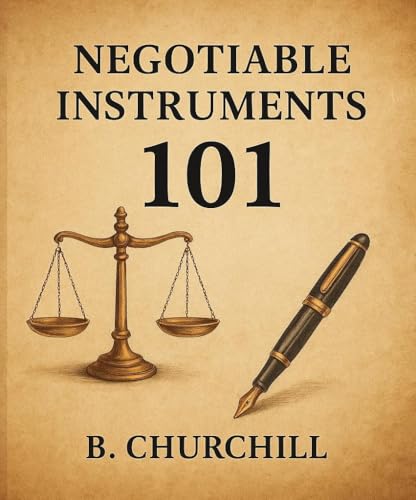 Negotiable Instruments 101: A Plain-English Guide to the UCC, Public Law 73-10, and Lawful Dischargehttps://www.amazon.com/dp/B0FWYXD9R3
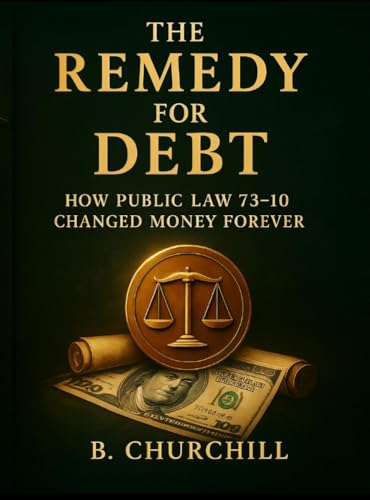 The Remedy for Debt: How Public Law 73-10 Changed Money Foreverhttps://www.amazon.com/dp/B0FXY9YMJ2