Original Creditor Versus Debt Buyer
This page is education, not legal advice. It is not a substitute for advice from a lawyer about your facts. The Fair Debt Collection Practices Act is a federal statute. The Consumer Financial Protection Bureau's Regulation F implements parts of that statute. State collection laws can add rules of their own. Whether a particular company is a "debt collector" under the Act is a fact question. Read the official text that applies to your matter.
People use "collector," "creditor," and "debt buyer" as if they were interchangeable. The federal statute does not. The Act's collection-practice rules run against a "debt collector" as that term is defined. An original creditor collecting its own account in its own name is generally outside that definition. A later buyer of the account may or may not fall inside it. The difference matters for validation notices, communication rules, and other duties under the Act. It does not, by itself, decide who owns the account or who can sue.
The Statute's Definition of "Creditor"
Section 1692a(4) states that the term "creditor" means any person who offers or extends credit creating a debt or to whom a debt is owed, but such term does not include any person to the extent that he receives an assignment or transfer of a debt in default solely for the purpose of facilitating collection of such debt for another.
Regulation F uses the same line. Section 1006.2(g) defines "creditor" as any person who offers or extends credit creating a debt or to whom a debt is owed, and then excludes any person to the extent that such person receives an assignment or transfer of a debt in default solely to facilitate collection of the debt for another.
Two parts of that definition do the work. A person who offered the credit, or a person to whom the debt is now owed, can be a creditor. A person who takes a defaulted account only to collect it for someone else is not a creditor under this definition.
The Statute's Definition of "Debt Collector"
Section 1692a(6) defines "debt collector" as any person who uses any instrumentality of interstate commerce or the mails in any business the principal purpose of which is the collection of any debts, or who regularly collects or attempts to collect, directly or indirectly, debts owed or due or asserted to be owed or due another.
The sentence has two tests. One looks at the principal purpose of the business. The other looks at whether the person regularly collects debts owed to another. Either test can bring a person inside the definition.
The same paragraph then adds an express inclusion: the term includes any creditor who, in the process of collecting his own debts, uses any name other than his own which would indicate that a third person is collecting or attempting to collect such debts.
The paragraph also lists exclusions. Clause (A) excludes any officer or employee of a creditor while, in the name of the creditor, collecting debts for that creditor. Clause (F) excludes a person collecting a debt to the extent the activity concerns a debt that person originated, or a debt that was not in default when that person obtained it, among other listed cases.
Regulation F restates the same definition and the same exclusions at Section 1006.2(i).
An Original Creditor Collecting in Its Own Name
The Bureau's debt-collection glossary describes an original creditor, generally speaking, as the company that gave you the loan or credit. That company may attempt to collect a past-due account itself, hire a debt collector, or sell the account.
A bank, retailer, or lender collecting its own consumer account, in its own name, is generally aiming only to collect a debt owed to itself. It is not, on that conduct alone, regularly collecting debts owed to another. Its employees collecting in the creditor's name are also outside the definition under clause (A). The Section 1692g validation process, and the Act's other debt-collector duties, therefore do not run against that creditor the way they run against a third-party collector.
State law and other federal statutes may still govern the creditor's conduct. This page does not catalog them.
A Collector Hired to Collect for Someone Else
The second test in Section 1692a(6) is the one most people have in mind. A collection agency or a law firm that regularly collects debts owed to another is a debt collector under that language. The Act's rules on validation, communication, and false or misleading representations apply to that collector, including Section 1692e, which bars any false, deceptive, or misleading representation in connection with collection.
A company can be a debt collector for some accounts and not for others. The definition is tied to the activity and, for several exclusions, to the particular debt.
A Company That Buys the Debt for Its Own Account
This is the question the Supreme Court decided in Henson v. Santander Consumer USA Inc., 582 U.S. 79 (2017). The complaint in that case alleged that CitiFinancial Auto had loaned money to the petitioners, that the petitioners had defaulted, and that Santander then purchased the defaulted loans and sought to collect in ways the petitioners believed violated the Act. The lower courts held that Santander did not qualify as a debt collector because it did not regularly seek to collect debts "owed ... another," but sought instead only to collect debts that it purchased and owned.
The Court affirmed. The holding, in the Court's words, is that a company may collect debts that it purchased for its own account, like Santander did there, without triggering the statutory definition in dispute. By defining debt collectors to include those who regularly seek to collect debts "owed ... another," the statute's plain language, the Court said, seems to focus on third-party collection agents regularly collecting for a debt owner—not on a debt owner seeking to collect debts for itself. All that matters under that definition, the Court explained, is whether the target of the lawsuit regularly seeks to collect debts for its own account or does so for another.
The Court was careful about the limits of that holding. It noted two questions it did not attempt to answer. First, the petitioners had also suggested that Santander regularly acted as a third-party collection agent for debts owed to others, but that theory was not before the Court. Second, the parties had briefly alluded to the other statutory definition—the one that covers a business the principal purpose of which is the collection of any debts—but the parties had not much litigated that alternative definition, and in granting review the Court did not agree to address it either.
In short: buying a defaulted account and collecting it for your own account does not, standing alone, satisfy the "owed ... another" test. The "principal purpose" test was left for another day.
The Court also observed that a company collecting purchased defaulted debt for its own account would hardly seem to be barred from qualifying as a creditor under Section 1692a(4). The exclusion in that definition applies only when the debt is assigned or transferred "solely for the purpose of facilitating collection of such debt for another."
Regulation F Follows the Same Line
The official interpretation of Regulation F, comment 2(i)-1, states the Bureau's reading. A person who collects or attempts to collect defaulted debts that the person has purchased, but who does not collect or attempt to collect, directly or indirectly, debts owed or due, or asserted to be owed or due, to another, and who does not have a business the principal purpose of which is the collection of debts, is not a debt collector as defined in Section 1006.2(i).
That comment keeps both tests in view. A purchaser who also regularly collects for others, or whose business has the collection of debts as its principal purpose, can still be a debt collector under the regulation.
Everyday Speech Is Broader Than the Statute
The Bureau's consumer glossary sometimes groups collection agencies and debt buyers together under the heading "debt collector" for a general audience. That is useful everyday language. It is not the statutory test. This page follows the Act, Regulation F, and the Court's holding in Henson. A later buyer is not automatically inside the Act, and is not automatically outside it.
Why the Label Matters
If a company is a debt collector under Section 1692a(6), the Act's duties attach. Those duties include the validation-notice and dispute rules in Section 1692g, the venue limits on legal actions in Section 1692i, and the ban on false or misleading representations in Section 1692e. Companion pages on this site cover the validation notice, the written dispute, and what validation is not.
If the company is an original creditor collecting in its own name, those particular duties generally do not apply. Other law still might. If the company is a later buyer collecting for its own account, Henson answers only one of the two definitional tests. The facts of that company's business still matter.
The label also matters in a lawsuit, but in a different way. Whether or not the Act applies, a later buyer that sues is asking the court to enter judgment in the buyer's name. A companion page on this site covers what a collection plaintiff has to prove. The forum's proof rules, not the Act's definition of "debt collector," decide what showing of a transfer is enough to obtain a judgment.
What This Page Does Not Decide
This page does not tell you whether a particular bank, buyer, or law firm is a debt collector, whether a particular account was in default when it was obtained, or how a particular court would apply the principal-purpose test left open in Henson. Those questions turn on facts. Compare the official text with the names and the papers in your file, and get legal help when you need it for a specific case.
Sources
- 15 U.S.C. s. 1692a(4) and (6). Definitions. Legal Information Institute, Cornell Law School. https://www.law.cornell.edu/uscode/text/15/1692a
- 15 U.S.C. s. 1692e. False or misleading representations. Legal Information Institute, Cornell Law School. https://www.law.cornell.edu/uscode/text/15/1692e
- 15 U.S.C. s. 1692g. Validation of debts. Legal Information Institute, Cornell Law School. https://www.law.cornell.edu/uscode/text/15/1692g
- 15 U.S.C. s. 1692i. Legal actions by debt collectors. Legal Information Institute, Cornell Law School. https://www.law.cornell.edu/uscode/text/15/1692i
- 12 C.F.R. s. 1006.2(g) and (i). Definitions. Electronic Code of Federal Regulations. https://www.ecfr.gov/current/title-12/chapter-X/part-1006/subpart-A/section-1006.2
- 12 C.F.R. Part 1006, Supplement I, comment 2(i)-1. Official Interpretations. Electronic Code of Federal Regulations. https://www.ecfr.gov/current/title-12/chapter-X/part-1006/appendix-Supplement%20I%20to%20Part%201006
- Henson v. Santander Consumer USA Inc., 582 U.S. 79 (2017). Legal Information Institute, Cornell Law School. Official slip opinion also at the Supreme Court of the United States. https://www.law.cornell.edu/supremecourt/text/16-349 https://www.supremecourt.gov/opinions/16pdf/16-349_c07d.pdf
- Consumer Financial Protection Bureau. Debt collection key terms. "Debt collector" and "Original creditor." https://www.consumerfinance.gov/consumer-tools/debt-collection/answers/key-terms/
Further Reading
The books below are from this publisher's catalog. Links go to the publisher's own titles on Amazon. This site has not joined the Amazon Associates program and does not earn a referral commission from these links.
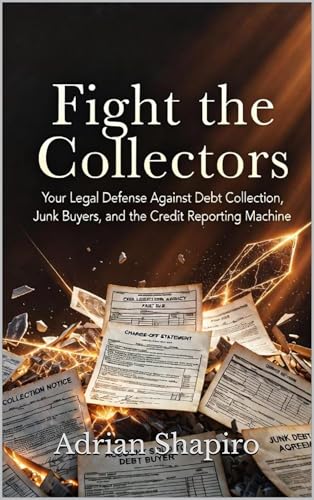 Fight the Collectors: Your Legal Defense Against Debt Collection, Junk Buyers, and the Credit Reporting Machinehttps://www.amazon.com/dp/B0GXMTVZVT
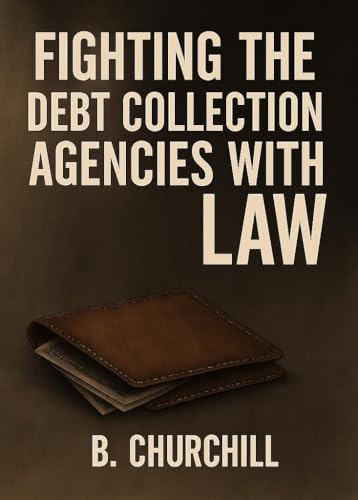 Fighting the Debt Collection Agencies with Lawhttps://www.amazon.com/dp/B0FX7DM2P1