Disputing Credit Card Billing Errors Under the Fair Credit Billing Act
This page is education, not legal advice. It is not a substitute for advice from a lawyer about your facts. The Fair Credit Billing Act provisions quoted here are 15 U.S.C. ss. 1666, 1666a, 1666b, and 1666i. Regulation Z, 12 C.F.R. ss. 1026.13 and 1026.12(c), implements those rules for open-end consumer credit. This page does not decide whether a particular charge is a billing error, or whether a particular claim can be asserted against a card issuer. Read the official statute and regulation, and get legal help when you need it for a specific case.
A credit-card periodic statement can contain a charge the cardholder did not make, a charge in the wrong amount, a missing payment, or a purchase that was not delivered as agreed. The Fair Credit Billing Act and Regulation Z set a written-notice process for that kind of error, limits on collection and credit reporting while the error is under review, and a separate rule on when a cardholder may assert claims and defenses against the card issuer. Companion pages on this site cover written debt disputes under the Fair Debt Collection Practices Act and credit-reporting disputes under the Fair Credit Reporting Act. This page stays on the billing-error and claims-and-defenses rules named above.
The Written Billing-Error Notice
Section 1666(a) starts the process when a creditor, within 60 days after having transmitted to an obligor a statement of the obligor's account in connection with an extension of consumer credit, receives at the address disclosed under 15 U.S.C. s. 1637(b)(10) a written notice from the obligor. The notice must set forth or otherwise enable the creditor to identify the name and account number of the obligor, indicate the obligor's belief that the statement contains a billing error and the amount of that error, and set forth the reasons for that belief, to the extent applicable. A notice on a payment stub or other payment medium supplied by the creditor does not count if the creditor so stipulates with the required disclosure.
Regulation Z, 12 C.F.R. s. 1026.13, implements that 60-day written-notice rule and the address requirement. The clock is measured from the creditor's transmittal of the statement, and the creditor must receive the notice at the billing-error address. A delayed or misdirected notice can miss the statutory window even if the cardholder later writes to a general customer-service address.
Section 1666(b) defines a "billing error." The list includes: a reflection on a statement of an extension of credit that was not made to the obligor or was not in the amount reflected; a reflection of an extension of credit for which the obligor requests additional clarification, including documentary evidence; a reflection of goods or services not accepted by the obligor or his designee, or not delivered in accordance with the agreement made at the time of the transaction; the creditor's failure to reflect properly a payment made by the obligor or a credit issued to the obligor; a computation error or similar error of an accounting nature; failure to transmit the required periodic statement to the last address of the obligor disclosed to the creditor, unless that address was furnished less than 20 days before the end of the billing cycle; and any other error described in regulations of the Bureau. Regulation Z restates that definition in 12 C.F.R. s. 1026.13(a).
What the Creditor Must Do, and What the Cardholder May Withhold
Once a timely written notice has been received, section 1666(a) requires the creditor, unless the obligor later agrees that the statement was correct, to send a written acknowledgment not later than 30 days after receipt of the notice, unless the creditor has already completed the resolution steps within that 30-day period, and, not later than two complete billing cycles of the creditor (in no event later than 90 days) after receipt of the notice and prior to taking any action to collect the amount indicated by the obligor, either to make appropriate corrections, including the crediting of any finance charges on amounts erroneously billed, and notify the obligor, or to send a written explanation or clarification after an investigation, and, upon request, provide copies of documentary evidence of the obligor's indebtedness. Regulation Z, 12 C.F.R. s. 1026.13(c), restates the 30-day acknowledgment and the two-complete-billing-cycles / 90-day resolution cap.
Until the billing error is resolved, 12 C.F.R. s. 1026.13(d)(1) states that the consumer need not pay, and the creditor may not try to collect, any portion of any required payment that the consumer believes is related to the disputed amount, including related finance or other charges. The creditor may still send statements of account. Section 1666(c) makes clear that sending statements, which may include finance charges on amounts in dispute, is not an "action to collect" the disputed amount if the account is not restricted or closed because of the failure to pay that amount and the creditor indicates that payment of that amount is not required pending compliance with the section. Nothing in section 1666 prohibits the creditor from collecting amounts that the obligor has not indicated contain a billing error. The withholding right is the disputed amount and related charges, not the entire balance.
Adverse Credit Reporting During a Billing-Error Dispute
Section 1666a and 12 C.F.R. s. 1026.13(d)(2) restrict adverse credit reporting while the billing-error process is underway. After receiving a notice under section 1666(a), a creditor or its agent may not directly or indirectly threaten to report adversely on the obligor's credit rating or credit standing because of the obligor's failure to pay the amount indicated in the notice, and that amount may not be reported as delinquent to any third party until the creditor has met the requirements of section 1666 and has allowed the obligor the same number of days, not less than ten, thereafter to make payment as is provided under the credit agreement for undisputed amounts.
If the creditor later receives a further written notice that an amount is still in dispute within that payment time, section 1666a(b) provides that the creditor may not report the amount as delinquent because of the failure to pay it unless the creditor also reports that the amount is in dispute and, at the same time, notifies the obligor of the name and address of each party to whom the creditor is reporting information concerning the delinquency. Section 1666a(c) requires the creditor to report any subsequent resolution of those delinquencies to the parties to whom they were initially reported.
A Related Open-End Timing Rule
Section 1666b is not the billing-error process. It is a related open-end timing rule. A creditor may not treat a payment on a credit-card account under an open-end consumer credit plan as late for any purpose unless the creditor has adopted reasonable procedures designed to ensure that each periodic statement is mailed or delivered to the consumer not later than 21 days before the payment due date. If the plan provides a time period within which an obligor may repay without incurring an additional finance charge, that additional finance charge may not be imposed for the billing cycle of which that period is a part unless the statement was mailed or delivered not later than 21 days before the date specified in the statement by which payment must be made in order to avoid the finance charge.
Claims and Defenses Against the Card Issuer
Section 1666i is a different right from the billing-error process. Subject to the limitation in subsection (b), a card issuer who has issued a credit card to a cardholder pursuant to an open-end consumer credit plan shall be subject to all claims, other than tort claims, and defenses arising out of any transaction in which the credit card is used as a method of payment or extension of credit if three conditions are met: the obligor has made a good-faith attempt to obtain satisfactory resolution of a disagreement or problem relative to the transaction from the person honoring the credit card; the amount of the initial transaction exceeds $50; and the place where the initial transaction occurred was in the same State as the mailing address previously provided by the cardholder, or was within 100 miles from that address.
The $50 and same-state-or-100-mile limits do not apply if the person honoring the credit card is the same person as the card issuer, is controlled by the card issuer, is under direct or indirect common control with the card issuer, is a franchised dealer in the card issuer's products or services, or has obtained the order for the transaction through a mail solicitation made by or participated in by the card issuer in which the cardholder is solicited to enter into the transaction by using the credit card issued by the card issuer. Regulation Z, 12 C.F.R. s. 1026.12(c), implements this claims-and-defenses rule, including the $50 and 100-mile or same-state limits, and states that the cardholder may withhold payment up to the amount of credit outstanding for the property or services that gave rise to the dispute and any finance or other charges imposed on that amount. Section 1666i(b) caps the amount of claims or defenses at the amount of credit outstanding with respect to the transaction at the time the cardholder first notifies the card issuer or the person honoring the card of the claim or defense.
The billing-error process and the claims-and-defenses rule can overlap in a delivery or merchandise dispute, but they are not the same right. The billing-error process is triggered by a timely written notice of a listed billing error. The claims-and-defenses rule depends on a good-faith attempt to resolve the dispute with the person honoring the card, and, unless an exception applies, on the $50 and location limits. Neither rule tells you whether a particular transaction meets those conditions.
What This Page Does Not Decide
This page does not decide whether a particular charge is a billing error, whether a notice was timely, or whether a claims-and-defenses assertion is available. It does not unpack every subsection of Regulation Z, including offsets against deposit accounts. It does not treat a billing-error notice as a Fair Debt Collection Practices Act validation dispute or as a Fair Credit Reporting Act dispute. Read the official statute and regulation, compare them with the statement and the notice actually sent, and get legal help when you need it for a specific case.
Sources
- 15 U.S.C. s. 1666, s. 1666a, s. 1666b, and s. 1666i. Correction of billing errors; regulation of credit reports; timing of payments; rights of credit card customers. Legal Information Institute, Cornell Law School.
https://www.law.cornell.edu/uscode/text/15/1666
https://www.law.cornell.edu/uscode/text/15/1666a
https://www.law.cornell.edu/uscode/text/15/1666b
https://www.law.cornell.edu/uscode/text/15/1666i - 12 C.F.R. s. 1026.13. Billing error resolution. Legal Information Institute, Cornell Law School.
https://www.law.cornell.edu/cfr/text/12/1026.13 - 12 C.F.R. s. 1026.12(c). Special credit card provisions. Right of cardholder to assert claims or defenses against card issuer. Legal Information Institute, Cornell Law School.
https://www.law.cornell.edu/cfr/text/12/1026.12
Further Reading
The books below are from this publisher's catalog. Links go to the publisher's own titles on Amazon. This site has not joined the Amazon Associates program and does not earn a referral commission from these links.
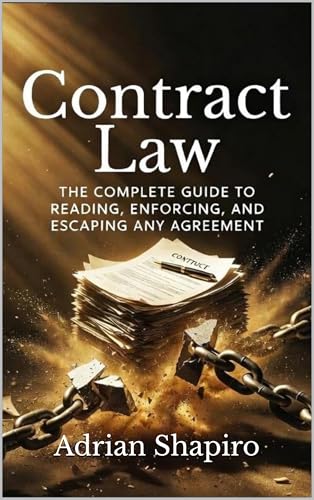 Contract Law: The Complete Guide to Reading, Enforcing, and Escaping Any Agreementhttps://www.amazon.com/dp/B0GYQNB7Q1
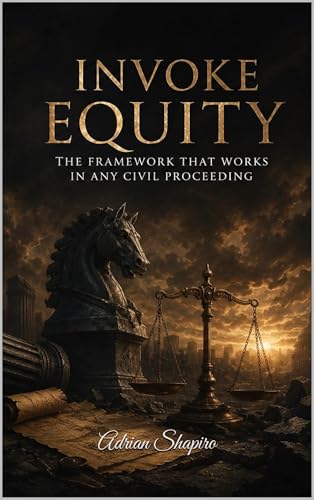 Invoke Equity: The Framework That Works in Any Civil Proceedinghttps://www.amazon.com/dp/B0H2R7B1CX