Arbitration Clauses in Credit Agreements and Collection Lawsuits
This page is education, not legal advice. It is not a substitute for advice from a lawyer about your facts. The Federal Arbitration Act is a federal statute. Sections 2, 3, and 4 of Title 9 of the United States Code are the provisions this page quotes. Sections 3 and 4 address proceedings in the courts of the United States and in United States district court. Most collection lawsuits are filed in state court. Those courts apply their own procedure and may also apply a state arbitration statute. This page does not publish a 50-state chart, and it does not tell you whether a particular clause is enforceable. Read the official text that applies to your matter, and the agreement.
An arbitration clause is a contractual term that sends a dispute to arbitration instead of, or before, a court decision on the merits. Credit-card and other consumer-credit agreements often contain such a term. The Federal Arbitration Act does not itself write the clause. It states when a written arbitration agreement of the kind it describes is enforceable, and what a federal court is to do when a party asks to stay a case or to compel arbitration. Companion pages on this site cover how to read a collection complaint and what can follow if you do not answer a lawsuit. This page stays on the federal statute, two Supreme Court decisions, and the Bureau's credit-card database.
When a Written Arbitration Agreement Is Enforceable
Section 2 of Title 9 is the basic enforceability rule. A written provision in any maritime transaction or a contract evidencing a transaction involving commerce to settle by arbitration a controversy thereafter arising out of such contract or transaction, or the refusal to perform the whole or any part thereof, or an agreement in writing to submit to arbitration an existing controversy arising out of such a contract, transaction, or refusal, shall be valid, irrevocable, and enforceable, save upon such grounds as exist at law or in equity for the revocation of any contract, or as otherwise provided in chapter 4.
The core of that sentence, for an ordinary credit agreement, is that a written arbitration provision in a contract evidencing a transaction involving commerce is valid, irrevocable, and enforceable, save upon such grounds as exist at law or in equity for the revocation of any contract. The current text also adds "or as otherwise provided in chapter 4," a later addition that is not unpacked here. The savings clause at the center of Section 2 points to ordinary contract-revocation grounds.
Section 2 does not decide, by itself, whether a particular credit agreement involved commerce, whether a particular writing is an agreement to arbitrate the claim that was filed, or whether a generally applicable contract defense would revoke that agreement.
Stay and an Order to Compel, in Federal Court
Section 3 is labeled "Stay of proceedings where issue therein referable to arbitration." If any suit or proceeding be brought in any of the courts of the United States upon any issue referable to arbitration under an agreement in writing for such arbitration, the court in which such suit is pending, upon being satisfied that the issue involved in such suit or proceeding is referable to arbitration under such an agreement, shall on application of one of the parties stay the trial of the action until such arbitration has been had in accordance with the terms of the agreement, providing the applicant for the stay is not in default in proceeding with such arbitration.
Two limits are in that sentence. The suit is in a court of the United States, and a party has to apply for the stay. The court, when satisfied that the issue is referable to arbitration under a written agreement, shall stay the trial until the arbitration has been had, if the applicant is not in default in proceeding with the arbitration.
Section 4 then allows a party aggrieved by the alleged failure, neglect, or refusal of another to arbitrate under a written agreement to petition any United States district court which, save for such agreement, would have jurisdiction under title 28 of the subject matter of a suit arising out of the controversy, for an order directing that such arbitration proceed in the manner provided for in such agreement. If the making of the agreement or the failure to comply therewith is not in issue, the court shall make an order directing the parties to proceed to arbitration in accordance with the terms of the agreement. If that issue is in dispute, the court shall proceed summarily to the trial thereof, including a jury trial if one is demanded in the manner the section describes.
These are federal-court procedures. A collection case already pending in state court is not automatically moved, stayed, or dismissed by quoting Section 3 or Section 4. The court's own rules, and the arbitration statute that court applies, are the texts to read there.
A Federal Court May Not Add an Arbitration-Specific Prejudice Requirement for Waiver
A party with an arbitration clause may litigate for a time and then ask a court to send the dispute to arbitration. The other party may argue that the right to arbitrate was waived by that litigation conduct. In Morgan v. Sundance, Inc., 596 U.S. 411 (2022), the Supreme Court addressed a federal-court rule that treated waiver of the right to arbitrate differently from ordinary federal waiver law by also requiring a showing of prejudice.
Robyn Morgan had signed an agreement to arbitrate employment disputes, then filed a lawsuit. Sundance initially defended in court, including by a motion to dismiss and mediation, and nearly eight months later moved to stay the litigation and compel arbitration. The courts below applied an Eighth Circuit rule under which a party waives the right to arbitration if it knew of the right, acted inconsistently with that right, and prejudiced the other party by its inconsistent actions. That prejudice requirement was not a feature of federal waiver law generally. The Eighth Circuit had adopted it because of the "federal policy favoring arbitration."
The Court held that the Eighth Circuit erred in conditioning a waiver of the right to arbitrate on a showing of prejudice. Justice Kagan, writing for a unanimous Court, explained that federal courts may not create arbitration-specific variants of federal procedural rules, like those concerning waiver, based on the FAA's "policy favoring arbitration." That policy acknowledges the statute's commitment to place arbitration agreements upon the same footing as other contracts. A court must hold a party to its arbitration contract just as it would to any other kind, but may not devise novel rules to favor arbitration over litigation. The usual federal rule of waiver does not include a prejudice requirement, and prejudice is not a condition of finding that a party waived its right to stay litigation or compel arbitration under the Act.
The Court assumed without deciding that the waiver framework the parties used was the correct one, and it did not decide whether Sundance had in fact waived the right. The holding is the federal rule of decision: an arbitration-specific prejudice requirement is not to be added to ordinary federal waiver law. This page does not invent a waiver test for state court.
When a Stay Is Requested, a Federal Court Must Stay Rather Than Dismiss
Federal courts had also split on a different question: if the dispute is arbitrable and a party asks for a stay under Section 3, may the court dismiss the case instead of staying it? In Smith v. Spizzirri, 601 U.S. 472 (2024), the Court answered that question.
The petitioners had filed suit in state court. The respondents removed the case to federal court and moved to compel arbitration and dismiss. The petitioners agreed their claims were arbitrable, but contended that Section 3 required a stay rather than a dismissal. The district court compelled arbitration and dismissed without prejudice. The Ninth Circuit affirmed.
The Court held that when a district court finds that a lawsuit involves an arbitrable dispute and a party has requested a stay pending arbitration, Section 3 compels the court to issue a stay, and the court lacks discretion to dismiss the suit. Justice Sotomayor, writing for a unanimous Court, stated that the plain text of Section 3 requires a court to stay the proceeding upon request. The word "shall" creates an obligation impervious to judicial discretion, and the obligation is to "stay" the proceeding. The long-established legal meaning of "stay" is a temporary suspension of legal proceedings, not a dismissal. The surrounding text anticipates that the parties can return to federal court if arbitration breaks down or fails to resolve the dispute.
The holding is tied to a request for a stay under Section 3 in a federal district court. It is not a rule about a state collection docket, or a rule that every arbitrable case must remain open when no stay is requested.
Finding the Credit-Card Agreement
An arbitration clause, if there is one, is in the agreement, not in the complaint. For credit-card accounts under an open-end, not home-secured, consumer credit plan, 12 C.F.R. s. 1026.58(c) requires card issuers to submit to the Bureau, on a quarterly schedule and with stated exceptions, the credit-card agreements they offer to the public, including a de minimis exception for an issuer with fewer than 10,000 open credit-card accounts as of the last business day of the calendar quarter. Section 1026.58(d) requires a card issuer, with stated exceptions, to post on its publicly available website the agreements it must submit to the Bureau. Section 1026.58(e) requires a card issuer, for any open credit-card account, either to post the cardholder's agreement on its website or to promptly provide a copy upon request.
The Bureau maintains a public credit-card agreement database in which a person can search for an agreement by the name of the issuer. The Bureau states that the agreements in the database have general terms and conditions, pricing, and fee information, and that they are not specific to an individual's account. If you need information specific to your account, the Bureau says, contact the issuer, which must make your agreement available upon request. The database is a starting point for a credit-card clause, not a database of every other kind of credit agreement, and not a ruling on whether a particular clause is enforceable.
What This Page Does Not Decide
This page does not tell you whether a particular credit agreement contains an enforceable arbitration clause, whether a particular party waived the right to arbitrate, or whether a particular collection case should be stayed. Those questions turn on the official text, the agreement, and facts. Compare the statute and the agreement with the court papers, and get legal help when you need it.
Sources
- 9 U.S.C. s. 2, s. 3, and s. 4. Validity, irrevocability, and enforcement of agreements to arbitrate; stay of proceedings; petition to compel arbitration. Legal Information Institute, Cornell Law School.
https://www.law.cornell.edu/uscode/text/9/2 https://www.law.cornell.edu/uscode/text/9/3 https://www.law.cornell.edu/uscode/text/9/4 - 12 C.F.R. s. 1026.58. Internet posting of credit card agreements. Electronic Code of Federal Regulations.
https://www.ecfr.gov/current/title-12/chapter-X/part-1026/subpart-G/section-1026.58 - Consumer Financial Protection Bureau. Credit card agreement database.
https://www.consumerfinance.gov/credit-cards/agreements/ - Morgan v. Sundance, Inc., 596 U.S. 411 (2022). Official slip opinion, Supreme Court of the United States.
https://www.supremecourt.gov/opinions/21pdf/21-328_m6ho.pdf - Smith v. Spizzirri, 601 U.S. 472 (2024). Official slip opinion, Supreme Court of the United States.
https://www.supremecourt.gov/opinions/23pdf/22-1218_5357.pdf
Further Reading
The books below are from this publisher's catalog. Links go to the publisher's own titles on Amazon. This site has not joined the Amazon Associates program and does not earn a referral commission from these links.
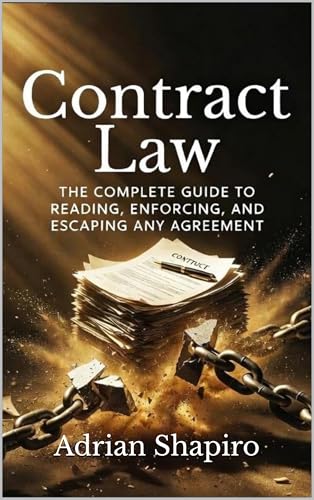 Contract Law: The Complete Guide to Reading, Enforcing, and Escaping Any Agreementhttps://www.amazon.com/dp/B0GYQNB7Q1
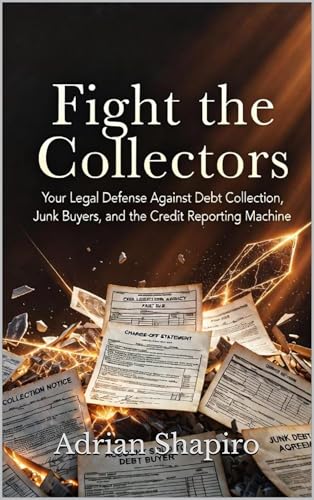 Fight the Collectors: Your Legal Defense Against Debt Collection, Junk Buyers, and the Credit Reporting Machinehttps://www.amazon.com/dp/B0GXMTVZVT